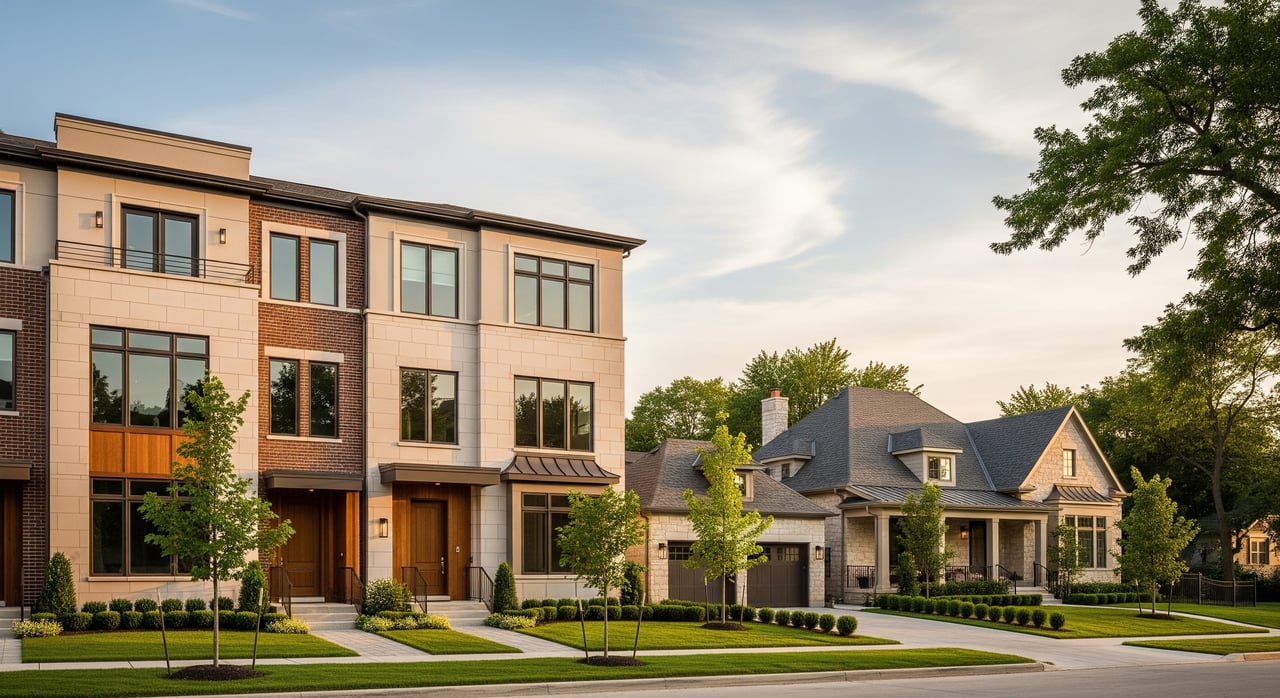
Trying to decide between a townhome and a single-family home in Schaumburg? You have great options, but the right choice depends on how you want to live and what you want to spend each month. In this guide, you’ll compare costs, HOA rules, maintenance, privacy, and resale so you can make a confident decision before you start touring. Let’s dive in.
Quick snapshot: townhome vs single-family
| Factor | Townhome | Single-family |
|---|---|---|
| Purchase price pattern | Often lower entry price in the same area, though well-located Schaumburg townhomes near retail or transit can narrow the gap | Typically higher due to land value |
| Monthly costs | HOA fees add predictability but increase the monthly total | No HOA fee in most cases, but you carry full maintenance |
| Maintenance | Association handles exterior and common areas; you handle interior | You handle roof, exterior, yard, driveway, and all systems |
| Insurance | Usually HO-6 policy plus association master policy | HO-3 policy covering dwelling and structures |
| HOA rules | Rules on exterior changes, parking, pets, rentals; governance matters | Fewer restrictions, subject to village zoning and permits |
| Outdoor space | Limited private space such as patios or small yards | Larger private yard, driveway, and garage common |
| Privacy and noise | Shared walls; construction and orientation influence noise | More separation and control over noise |
| Walkability and amenities | Often closer to retail, transit, and services | Quieter residential streets and larger lots |
| Resale | Targeted buyer pool; HOA health impacts value | Broad buyer pool and land value can aid resale |
Ownership costs in Schaumburg
Purchase price patterns
In many Schaumburg neighborhoods, townhomes list for less than nearby single-family homes because they include less land. That lower entry point helps first-time buyers and downsizers. In some micro-markets near major retail or transit, townhomes can command strong pricing that narrows the gap. Focus on your total monthly cost, not just list price.
Property taxes
Property taxes vary by parcel due to overlapping taxing districts. Single-family lots with higher assessed land value can carry larger total bills. Attached units are also taxed, and association budgets may reflect taxes on common elements. Compare recent tax bills for each property you are considering rather than using averages.
HOA fees
Most townhomes have monthly association dues. These can cover exterior maintenance, landscaping, snow removal, common insurance, and sometimes utilities or amenities. Fees vary in suburban Chicago, often starting in the low hundreds per month and rising with amenities and reserve funding. Confirm exactly what is included before you set your budget.
Utilities and the real monthly number
Shared walls in attached homes can improve energy efficiency. Single-family homes usually have separate metering and full responsibility for exterior systems. Your real monthly housing cost is mortgage plus property tax, insurance, HOA fees if applicable, maintenance, and utilities. Compare totals side by side before you choose.
Maintenance and insurance
What you maintain
If you buy a single-family home, you are responsible for the roof, siding, driveway, lawn, trees, and all systems. A common rule of thumb is to budget 1 to 3 percent of the home’s value per year for maintenance, depending on age and condition. In a townhome, the association typically handles exterior care, while you manage the interior and any items defined in the documents for your community.
Insurance differences
Single-family owners generally carry an HO-3 policy that covers the dwelling, detached structures, personal property, and liability as defined by the policy. Townhome and condo owners usually carry an HO-6 policy covering interior finishes and contents, while the association holds a master policy for common areas and often the exterior. Review the master policy to see if it is bare walls-in or broader and note deductibles that could lead to special assessments after major claims.
Reserves and special assessments
Associations should fund reserves to replace big-ticket items like roofs, siding, and parking lots. Low reserves, frequent special assessments, and deferred maintenance can increase your total cost and impact resale. Ask for the reserve study and recent assessment history when you evaluate a community.
HOA rules and due diligence
Documents to request
For townhomes or condos, request CC&Rs, bylaws, rules and regulations, the current budget, a reserve study, profit and loss, meeting minutes for the past 12 to 24 months, insurance certificates, a management contract, and a resale disclosure. These documents show you what is covered, what is restricted, and what is planned.
Restrictions to note
Common HOA rules include exterior modifications, parking and guest policies, pet rules, and rental limits. In Schaumburg, some exterior changes may also require village permits in addition to HOA approval. If flexibility is important to you, read rules closely before you make an offer.
Health indicators to check
Red flags include low reserve funding relative to expected needs, high delinquency in dues, frequent special assessments, poorly maintained common areas, or management turnover. Strong governance supports predictable costs and resale value.
Illinois legal context
Illinois law provides frameworks for common interest communities and condominiums, including owner rights to review records and association reporting standards. Confirm any active litigation or planned assessments and make sure the association is following required procedures.
Privacy, space, and lifestyle
Noise and privacy
Single-family homes provide more separation from neighbors and greater control over noise sources. Townhomes share walls, floors, or roofs, so construction quality and unit orientation matter. If you tour attached options, stand in common walls and listen at different times of day.
Yard and parking
Single-family homes usually include a private yard, driveway, and garage, which helps if you have pets, hobbies, or gardening plans. Townhomes often offer patios or small yards and may rely on assigned spaces or shared lots. Confirm guest parking rules if you host often.
Location and walkability
Townhome and condo communities in Schaumburg often sit near major employers, retail, and transit corridors, which can mean short trips for errands and commuting. Single-family neighborhoods tend to emphasize quieter streets and larger lots. Decide whether proximity or privacy matters more for your daily routine.
Resale dynamics and buyer pool
Marketability and buyer pool
Single-family homes generally attract the broadest buyer pool because of land, flexibility, and privacy. Townhomes draw focused audiences such as first-time buyers, empty nesters, busy professionals, and some investors. The size of your future buyer pool can affect days on market and negotiation power.
What influences appreciation
Land value and flexibility often support long-term appreciation for single-family homes. Well-located, well-managed townhome communities can also perform well, especially when demand for lower-maintenance living is strong. In Schaumburg, proximity to employers, schools, and transit can influence outcomes as much as property type.
HOA impact on resale
A well-funded, well-run association tends to support value and provide confidence to buyers and lenders. Associations with low reserves or a history of frequent special assessments can shrink the buyer pool and complicate financing.
Who each option fits
Townhome advantages for certain buyers
- You want minimal exterior chores and predictable monthly fees.
- You prefer proximity to retail or transit and like the idea of a lock-and-leave home.
- You value shared amenities and are comfortable with HOA governance.
Single-family advantages for certain buyers
- You want more private outdoor space for pets, hobbies, or gatherings.
- You value privacy, control over exterior changes, and future flexibility for projects.
- You want broad resale appeal and exposure to land value over time.
Hybrid ideas to consider
- If you need a yard on a tighter budget, consider smaller-lot detached homes or neighborhoods farther from major retail corridors.
- If you like attached living but want more outdoor space, look for end-unit townhomes or communities that include private yards.
Side-by-side due diligence checklist
Monthly cost worksheet
- List price and estimated mortgage principal and interest
- Property tax from the most recent bill for the exact parcel
- Insurance estimate: HO-3 for single-family or HO-6 for townhome
- HOA dues and what they include
- Maintenance and reserves you plan to set aside
- Utilities not covered by the HOA
Townhome or condo documents and questions
- Governing docs: CC&Rs, bylaws, rules, budget, reserve study, insurance declarations
- Meeting minutes for the past 12 to 24 months and any special assessment history
- Master policy type and deductible; what the HOA maintains versus the owner
- Rental policies, pet rules, parking and guest policies
Single-family inspection focus
- Roof age and condition, siding, windows, and exterior drainage
- HVAC age and service history; foundation and sump pump if applicable
- Driveway, sidewalks, trees, and any known sewer or water issues
Neighborhood and lifestyle checks
- Drive the area at different times for traffic, noise, and parking
- Proximity to transit, employers, and retail that fits your routine
- Sidewalks, parks, and common-area maintenance where applicable
Next steps
You do not have to figure this out alone. Our team helps you compare true monthly costs, read HOA documents, and evaluate maintenance and resale risks so you can move forward with confidence. If you want to see both property types in the same afternoon and run numbers side by side, we can set that up.
When you are ready to refine your criteria and tour the best-fit options in Schaumburg, reach out to the C Starr Team at @properties. We combine local expertise with data-driven guidance, professional presentation, and a streamlined process to help you secure the right home on the right terms.
FAQs
What costs should I compare for Schaumburg townhomes vs single-family homes?
- Add mortgage, parcel-specific property tax, insurance type, HOA dues if any, maintenance, and utilities to see your true monthly number.
How do HOA rules affect my day-to-day living in a Schaumburg townhome?
- Rules can limit exterior changes, set parking and pet policies, and restrict rentals, so review governing documents before you commit.
What insurance policy do I need for each property type?
- Single-family owners typically carry HO-3 coverage, while townhome and condo owners carry HO-6 coverage alongside the association’s master policy.
How can I gauge the financial health of a townhome association?
- Check reserve funding, dues delinquency, recent or pending special assessments, meeting minutes, and the scope of upcoming capital projects.
Will a single-family home in Schaumburg have better resale than a townhome?
- Single-family homes often draw a broader buyer pool, but well-managed, well-located townhome communities can also sell well depending on demand.
What if I want some outdoor space but prefer lower maintenance?
- Consider end-unit townhomes or communities with private yards, or look at smaller-lot detached homes that balance yard needs with upkeep.